


Header
If you see invasive wild pigs on the landscape, please report them to the proper authorities. In some provinces you can sport hunt invasive pigs. However, in order to successfully eradicate these incredibly adaptable and intelligent animals you have to eliminate the entire sounder group so it is best to use professionally trained wild pig eradication specialists, who often use corral traps to remove the entire group at once. Recreational hunting has been found to cause dispersal and increased nocturnal activities making it more difficult to detect and eradicate these animals.
What Can You Do?
(REPORT, DON'T SPORT HUNT!)
If you see invasive wild pigs on the landscape please report them.
British Columbia
Please click here or see this PDF
Alberta
Information on the invasive wild pig program please visit : https://www.alberta.ca/wild-boar.aspx
Report sightings to: 310-FARM or af.wildboar@gov.ab.ca
Saskatchewan
Sightings can be reported to the nearest crop insurance office or toll free # 1-888-935-0000. Sask Pork also has a toll-free line 1-833-PIGSPOT (833-744-7768)
For information about the program, please click here
Manitoba
All reports of wild pig sightings can be made through our website www.squealonpigsmb.org or through our toll-free number 1-833-SPOT-PIG
For information on invasive wild pigs in Manitoba: click here
Ontario
Reports can be submitted to wildpigs@ontario.ca or the iNaturalist app. For more information, please click here.
Québec
Please click here

New Brunswick
To report sightings: Contact Department of Natural Resources and Energy Development at (506) 453-3826 or dnr_mrnweb@gnb.ca
Nova Scotia
To report invasive wild pigs or any unusual, invasive or noteworthy observations please contact: wildlife@novascotia.ca
Prince Edward Island
Please visit: https://www.peinaturetracker.ca (LINK DOESN'T WORK) or http://peiinvasives.com
Newfoundland and Labrador
Report sightings to the Wildlife Division at 709-637-2025
Northwest Territories
To report sightings, please contact: wildlifeobs@gov.nt.ca
For information regarding related regulations please click here
Yukon
To report escaped livestock please contact the Agriculture Branch:
Phone: 867.667.5838
Toll Free: 1.800.661.0408 ext. 5838
Report sightings to: TIPP(Turn in Poachers and Polluters) line - toll free 1-800-661-0525
What Do They Look Like?
Identifying signs of invasive wild pigs
Distinguishing features of invasive species - Department of Natural Resources, Michigan
Recognizing Wild Hog Signs - Mississippi Wildlife, Fisheries, & Parks
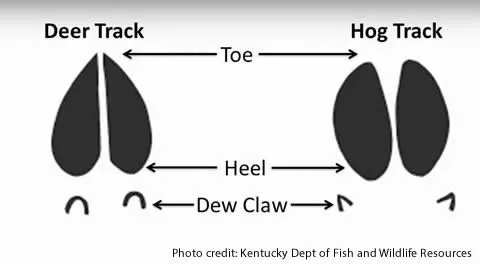
TRACKS
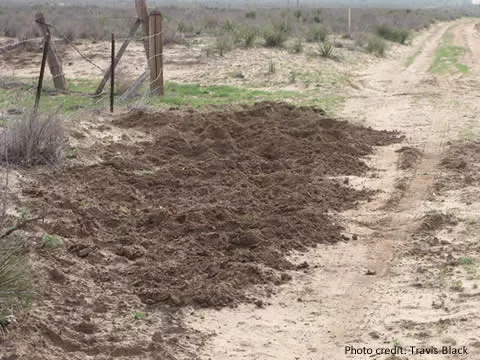
ROOTING
Feral & Wild Pig ID: Morphologic Characteristics And Differentiation of Domestics.
Presented by Travis Black. Click here to view the video.
Background
Invasive pigs are classified as any pig that lives in the wild which includes Eurasian boar, escaped domestic animals or any hybrids. Eurasian boar were first introduced into Canada in the 1980s and 90s as an incentive for producers to diversify their livestock. Escapes and intentional release of animals has caused well-established populations in some provinces. These animals easily adapt to their environment and have high reproductive rates making them one of the most invasive species in Canada.
They are considered an invasive species in Canada and can be very destructive and disruptive in ecosystems to which they are not native. Examples of the damage they inflict include predation of eggs of ground nesting birds and disruption of crops and native vegetation due to their wallowing and rooting behaviors. They are also carriers of diseases infectious to wildlife, domestic animals and people.
What The CWHC Is Doing
The CWHC has assembled and facilitates the functioning of two new working groups, a strategic invasive pig working group and an operational one, each with participants from across Federal, Provincial and Territorial Environment and Agriculture departments, researchers and stakeholder groups. We are working with partners, including ECCC to achieve Indigenous groups participation. Together with the working groups and key knowledge holders, shared national goals and priorities have been identified and are being explored to help inform invasive pig management decision-making in Canada.
The overarching purpose of the project is to facilitate an action agenda to prevent and mitigate social and ecological harm of invasive boar and pigs in Canada.
Brochures, Factsheets & Reading Material
Invasive Pigs - Brochures, Factsheets & Reading Material
| Title | Type | Lang |
|---|---|---|
| 📄Recommended Protocol for Sampling and Banking Tissues from Wild Pigs | document | EN | FR |
| 📄CWHC Wild Boar Fact Sheet | document | EN |
| 📄Squeal on Pigs Brochure 1 | document | EN |
| 📄Squeal on Pigs Brochure 2 | document | EN | FR |
| 📄Squeal on Pigs Brochure 3 | document | EN | FR |
| 📄Squeal on Pigs Brochure 4 | document | EN | FR |
| 📄Squeal on Pigs Brochure 5 | document | EN | FR |
| 📄Squeal on Pigs Brochure 6 | document | EN | FR |
External Resources
- Alberta Fact Sheet
- Ontario Fact Sheets
- Ontario Federation of Anglers and Hunters (en anglais)
- USDA-APHIS National Feral Swine Damage Management Program
- B.C. Small Lot Pork Producer Management & Production Manual
Disease Testing Of Wild Boar In Saskatchewan
The CWHC Western and Northern Region, with funding and support from the Ministry of Agriculture and Ministry of Environment, have been testing free-ranging wild boar for diseases that could have potential impacts for domestic animal and human health. Samples for testing were collected from boar trapped or culled as part of control programs. Initial results of disease testing were published in the Canadian Veterinary Journal (McGregor et al, 2015). The findings and conclusions have not significantly changed since that publication. Surveillance for occurrence of significant diseases in this invasive species is ongoing.
Table: Number of male and female wild boar captured and tested by year
* Includes six individuals of unknown sex
| Year | Female | Male | Total |
|---|---|---|---|
| 2009 | 9 | 9 | 18 |
| 2013 | 31 | 16 | 53* |
| 2014 | 4 | 2 | 6 |
| 2017 | 20 | 21 | 41 |
| 2018 | 17 | 7 | 24 |
| 2019 | 18 | 18 | 36 |
| Total | 99 | 73 | 178* |
Table: Numbers of female and male wild pigs tested for each pathogen between 2009 and 2019. Totals reflect number of individuals tested rather than number of tests.
| Pathogen | Female | Male | Undetermined | Total |
|---|---|---|---|---|
| Actinobacillus pleuropneumonia | 42 | 28 | 70 | |
| Chronic Wasting Disease | 16 | 10 | 26 | |
| Influenza A | 75 | 49 | 124 | |
| Mycoplasma hypopneumoniae | 26 | 25 | 51 | |
| Parasitology | 40 | 23 | 6 | 69 |
| Porcine circovirus | 66 | 44 | 6 | 116 |
| PRRS | 85 | 65 | 6 | 156 |
| Rotavirus | 11 | 4 | 15 | |
| TGEV | 7 | 4 | 11 | |
| TGEV/PRCV | 69 | 47 | 116 | |
| Torque Tenovirus | 4 | 2 | 6 | |
| Toxoplasma gondii | 43 | 28 | 71 | |
| Trichinella | 40 | 34 | 74 | |
| Total | 99 | 73 | 6 | 178 |
Table: Number of individuals tested for each pathogen by year.
| Pathogen | 2009 | 2013 | 2014 | 2017 | 2018 | 2019 | Total |
|---|---|---|---|---|---|---|---|
| Actinobacillus pleuropneumonia | 20 | 39 | 11 | 70 | |||
| Influenza A | 20 | 6 | 40 | 15 | 43 | 124 | |
| Mycoplasma hypopneumoniae | 40 | 11 | 51 | ||||
| Porcine circovirus | 6 | 44 | 6 | 15 | 45 | 116 | |
| PRRS | 6 | 44 | 6 | 40 | 15 | 45 | 156 |
| Rotavirus | 15 | 15 | |||||
| TGEV | 11 | 11 | |||||
| TGEV/PRCV | 20 | 2 | 40 | 11 | 43 | 116 | |
| Torque Tenovirus | 6 | 6 | |||||
| Toxoplasma gondii | 20 | 40 | 11 | 71 | |||
| Trichinella | 18 | 41 | 15 | 74 | |||
| Total | 18 | 53 | 6 | 41 | 15 | 45 | 178 |
Of the above tests, there were two positives and one suspect for rotavirus (2018), four positives for Influenza A (3 in 2017; 1 in 2019), one positive for Torque Tenovirus (2009), and 69 positives for A. pleuropneumonia (20 in 2013; 39 in 2017; 10 in 2018). Testing protocols differed from year to year and several test types may have been conducted for a particular pathogen.
Table: Results of chronic wasting disease testing in 2018 and 2019.
| CWD Result | Adult | Juvenile | Total |
|---|---|---|---|
| Lymph tissue negative | 7 | 14 | 21 |
| Obex negative | 4 | 1 | 5 |
| Total | 11 | 15 | 26 |
Publications
Management
- Fahlman, Å., Lindsjö, J., Norling, T.A. et al. Wild boar behaviour during live-trap capture in a corral-style trap: implications for animal welfare. Acta Vet Scand 62, 59 (2020). https://doi.org/10.1186/s13028-020-00557-9
- Croft S, Franzetti B, Gill R, Massei G (2020) Too many wild boar? Modelling fertility control and culling to reduce wild boar numbers in isolated populations. PLoS ONE 15(9): e0238429. https://doi.org/10.1371/journal.pone.0238429
- Yokoyama Y, Nakashima Y, Yajima G, Miyashita T. 2020 Simultaneous estimation of seasonal population density,
habitat preference and catchability of wild boars based on camera data and harvest records. R. Soc. Open Sci. 7: 200579. http://dx.doi.org/10.1098/rsos.200579 - Fischer, J.W., Snow, N.P., Wilson, B.E. et al. Factors and costs associated with removal of a newly established population of invasive wild pigs in Northern U.S.. Sci Rep 10, 11528 (2020). https://doi.org/10.1038/s41598-020-68264-z
- Adams P, Fontaine J, Huston R, Fleming P. Quantifying efficacy of feral pig (Sus scrofa) population management. Wildlife Research. 2019;46(7):587.https://doi.org/10.1071/WR18100
- VerCauteren, K. (Ed.), Beasley, J. (Ed.), Ditchkoff, S. (Ed.), Mayer, J. (Ed.), Roloff, G. (Ed.), Strickland, B. (Ed.). (2020). Invasive Wild Pigs in North America. Boca Raton: CRC Press, https://doi.org/10.1201/b22014
- Wilber M, Chinn S, Beasley J, Boughton R, Brook R, Ditchkoff S et al. Predicting functional responses in agro‐ecosystems from animal movement data to improve management of invasive pests. Ecological Applications. 2019;. https://esajournals.onlinelibrary.wiley.com/doi/full/10.1002/eap.2015
- Grady M, Harper E, Carlisle K, Ernst K, Shwiff S. Assessing public support for restrictions on transport of invasive wild pigs (Sus scrofa) in the United States. Journal of Environmental Management. 2019;237:488-494. https://doi.org/10.1016/j.jenvman.2019.02.107. https://www.sciencedirect.com/science/article/pii/S0301479719302671?via%3Dihub
- Carr A, Milleson M, Hernández F, Merrill H, Avery M, Wisely S. Wildlife Management Practices Associated with Pathogen Exposure in Non-Native Wild Pigs in Florida, U.S. Viruses. 2018;11(1):14.. doi:10.3390/v11010014 https://www.ncbi.nlm.nih.gov/pmc/articles/PMC6356989/
- Watkins C, Caplenor C, Poudyal N, Muller L, Yoest C. Comparing landowner support for wild hog management options in Tennessee. Journal of Environmental Management. 2019;232:722-728.https://doi.org/10.1016/j.jenvman.2018.11.075. https://www.sciencedirect.com/science/article/pii/S0301479718313409?via%3Dihub
- Brondum M, Collier Z, Luke C, Goatcher B, Linkov I. Selection of invasive wild pig countermeasures using multicriteria decision analysis. Science of The Total Environment. 2017;574:1164-1173.https://doi.org/10.1016/j.scitotenv.2016.09.155. https://www.sciencedirect.com/science/article/pii/S004896971632085X?via%3Dihub
- Keiter D, Beasley J. Hog Heaven? Challenges of Managing Introduced Wild Pigs in Natural Areas. Natural Areas Journal. 2017;37(1):6-16. https://doi.org/10.3375/043.037.0117 https://bioone.org/journals/Natural-Areas-Journal/volume-37/issue-1/043.037.0117/Hog-Heaven-Challenges-of-Managing-Introduced-Wild-Pigs-in-Natural/10.3375/043.037.0117.short
- Centner T, Shuman R. Governmental Provisions to Manage and Eradicate Feral Swine in Areas of the United States. AMBIO. 2014;44(2):121-130. https://doi.org/10.1007/s13280-014-0532-9 https://www.ncbi.nlm.nih.gov/pmc/articles/PMC4329133/
- https://www.sciencedirect.com/science/article/abs/pii/S0006320709004935
- Keiter D, Cunningham F, Rhodes O, Irwin B, Beasley J. Optimization of Scat Detection Methods for a Social Ungulate, the Wild Pig, and Experimental Evaluation of Factors Affecting Detection of Scat. PLOS ONE. 2016;11(5):e0155615. doi:10.1371/journal.pone.0155615 https://journals.plos.org/plosone/article?id=10.1371/journal.pone.0155615
- Fischer J, McMurtry D, Blass C, Walter W, Beringer J, VerCauteren K. Effects of simulated removal activities on movements and space use of feral swine. European Journal of Wildlife Research. 2016;62(3):285-https://digitalcommons.unl.edu/icwdm_usdanwrc/1843/
- Joshua A. Gaskamp, Kenneth L. Gee, Tyler A. Campbell, Nova J. Silvy & Stephen L. Webb | (2018) Damage caused to rangelands by wild pig rooting activity is mitigated with intensive trapping, Cogent Environmental Science, 4:1, 1540080 https://www.cogentoa.com/article/10.1080/23311843.2018.1540080
- Bodenchuk, M. J, & VerCauteren, K. C. (2016). Management of Feral Swine. Proceedings of the Vertebrate Pest Conference, 27. http://dx.doi.org/10.5070/V427110373
- Metcalf, E.M., Parker, I.D., Lopez, R.R., Higginbotham, B., Davis, D.S. and Gersbach, J.R. (2014), Impact of gate width of corral traps in potential wild pig trapping success. Wildl. Soc. Bull., 38: 892-895. doi:10.1002/wsb.458
- Williams K, Huyvaert K, Vercauteren K, Davis A, Piaggio A. Detection and persistence of environmental DNA from an invasive, terrestrial mammal. Ecology and Evolution. 2017;8(1):688-695. https://doi.org/10.1002/ece3.3698
- Davis A, Keiter D, Kierepka E, Slootmaker C, Piaggio A, Beasley J et al. A comparison of cost and quality of three methods for estimating density for wild pig (Sus scrofa). Scientific Reports. 2020;10(1). https://dx.doi.org/10.1038%2Fs41598-020-58937-0
- McClure M, Burdett C, Farnsworth M, Sweeney S, Miller R. A globally-distributed alien invasive species poses risks to United States imperiled species. Scientific Reports. 2018;8(1). https://doi.org/10.1038/s41598-018-23657-z
- Koen EL, Newton EJ. Outreach increases detections of an invasive species in a crowdsourced monitoring program. Biological Invasions. 2021; https://doi.org/10.1007/s10530-021-02526-3(0123456789().,-volV)( 01234567
- Lavelle et al. Handling System for Wild Pigs. Wildlife Society Bulletin: Vol. 45, Issue 1, March 2021. Wildlife Society Bulletin. 2021;45(1). DOI: 10.1002/wsb.1160
- McLean, H., Teel, T., Bright, A., Jaebker, L., Tomecek, J., Frank, M., Connally, R., Shwiff, S. and Carlisle, K., 2021. Understanding tolerance for an invasive species: An investigation of hunter acceptance capacity for wild pigs (Sus scrofa) in Texas. Journal of Environmental Management, 285, p.112143. https://doi.org/10.1016/j.jenvman.2021.112143
- Tucker Williams, E., Lepczyk, C., Morse, W. and Smith, M., 2021. Stakeholder perspectives towards the use of toxicants for managing wild pigs. PLOS ONE, 16(2), p.e0246457. https://doi.org/10.1371/journal.pone.0246457
- Davis, Amy J.; Keiter, David A.; Kierepka, Elizabeth M.; Slootmaker, C.; Piaggio, Antoinette J.; Beasley, James C.; and Pepin, K. M., "A comparison of cost and quality of three methods for estimating density for wild pig (Sus scrofa)" (2020). USDA National Wildlife Research Center - Staff Publications. 2372.
https://digitalcommons.unl.edu/icwdm_usdanwrc/2372 - Gaskamp, J.A.; Gee, K.L.;Campbell, T.A.; Silvy, N.J.;Webb, S.L.Effectiveness and Efficiency of Corral Traps, Drop Nets and Suspended Traps for Capturing Wild Pigs (Susscrofa). Animals 2021, 11, 1565.https://doi.org/10.3390/ani11061565
- Snow, N.P., Halseth, J.M., Werner, S.J., VerCauTeren, K.C., Anthraquinone Repellent Seed Treatment on Corn Reduces Feeding by Wild Pigs, Crop Protection, https:// doi.org/10.1016/j.cropro.2021.105570.
Ecology
- Silveira de OliveiraEˆ, Ludwig da Fontoura Rodrigues M, Machado Severo M, Gomes dos Santos T, Kasper CB (2020) Who’s afraid of the big bad boar? Assessing the effect of wild boar presence on the occurrence and activity patterns of other mammals. PLoS ONE 15(7): e0235312. https://doi.org/10.1371/journal.pone.023531
- Erdtmann D, Keuling O. 2020. Behavioural patterns of free roaming wild boar in a spatiotemporal context. PeerJ 8:e10409 https://doi.org/10.7717/peerj.10409
- Stefano Focardi, Valentina La Morgia, Paolo Montanaro, Francesco Riga, Alessandro Calabrese, Francesca Ronchi, Paola Aragno, Marianne Scacco, Roberta Calmanti, Barbara Franzetti "Reliable estimates of wild boar populations by nocturnal distance sampling," Wildlife Biology, 2020(4), https://doi.org/10.2981/wlb.00694
- Stolle K, van Beest FM, Vander Wal E, and Brook RK. 2015. Diurnal and nocturnal activity patterns of invasive Wild Boar (Sus scrofa) in Saskatchewan, Canada. Canadian Field-Naturalist 129(1): 76–79.
https://www.canadianfieldnaturalist.ca/index.php/cfn/article/view/1670 - O’Brien P, Vander Wal E, Koen E, Brown C, Guy J, van Beest F et al. Understanding habitat co-occurrence and the potential for competition between native mammals and invasive wild pigs (Sus scrofa) at the northern edge of their range. Canadian Journal of Zoology. 2019;97(6):537-546. https://www.nrcresearchpress.com/doi/10.1139/cjz-2018-0156#.XnkQAYhKiUk
- Koen E, Vander Wal E, Kost R, Brook R. Reproductive Ecology of Recently Established Wild Pigs in Canada. The American Midland Naturalist. 2018;179(2):275-286. https://doi.org/10.1674/0003-0031-179.2.275
- Chinn, S.M., Kilgo, J.C., Vukovich, M.A. et al. Influence of intrinsic and extrinsic attributes on neonate survival in an invasive large mammal. Sci Rep 11, 11033 (2021). https://doi.org/10.1038/s41598-021-90495-x
Distribution
- McClure M, Burdett C, Farnsworth M, Lutman M, Theobald D, Riggs P et al. Modeling and Mapping the Probability of Occurrence of Invasive Wild Pigs across the Contiguous United States. PLOS ONE. 2015;10(8):e0133771. doi:10.1371/ journal.pone.0133771
- Lewis J, Corn J, Mayer J, Jordan T, Farnsworth M, Burdett C et al. Historical, current, and potential population size estimates of invasive wild pigs (Sus scrofa) in the United States. Biological Invasions. 2019;21(7):2373-2384. https://doi.org/10.1007/s10530-019-01983-1
- Brook R, van Beest F. Feral wild boar distribution and perceptions of risk on the central Canadian prairies. Wildlife Society Bulletin. 2014;38(3):486-494. doi:10.1002/wsb.424
- Snow N, Jarzyna M, VerCauteren K. Interpreting and predicting the spread of invasive wild pigs. Journal of Applied Ecology. 2017;54(6):2022-2032. doi:10.1111/1365-2664.12866
- Aschim, R.A., Brook, R.K. Evaluating Cost-Effective Methods for Rapid and Repeatable National Scale Detection and Mapping of Invasive Species Spread. Sci Rep 9, 7254 (2019). https://www.nature.com/articles/s41598-019-43729-y#citeas
- Michel N, Laforge M, Van Beest F, Brook R. Spatiotemporal trends in Canadian domestic wild boar production and habitat predict wild pig distribution. Landscape and Urban Planning. 2017;165:30-38. https://doi.org/10.1016/j.landurbplan.2017.05.003
Disease
- Maya-Badillo, B.A.; Ojeda-Flores, R.; Chaves, A.; Reveles-Félix, S.; Orta-Pineda, G.; Martínez-Mercado, M.J.; Saavedra-Montañez, M.; Segura-Velázquez, R.; Sanvicente, M.; Sánchez-Betancourt, J.I. Eco-Epidemiological Evidence of the Transmission of Avian and Human Influenza A Viruses in Wild Pigs in Campeche, Mexico. Viruses 2020, 12, 528. https://doi.org/10.3390/v12050528
- Miller, R.S., Sweeney, S.J., Slootmaker, C. et al. Cross-species transmission potential between wild pigs, livestock, poultry, wildlife, and humans: implications for disease risk management in North America. Sci Rep 7, 7821 (2017). https://doi.org/10.1038/s41598-017-07336-z
- Fujimoto Y, Inoue H, Ozawa M, Matsuu A. Serological survey of influenza A virus infection in Japanese wild boars (Sus scrofa leucomystax). Microbiol Immunol. 2019 Dec;63(12):517-522. DOI: 10.1111/1348-0421.12750
- McGregor GF, Gottschalk M, Godson DL, Wilkins W, Bollinger TK. Disease risks associated with free-ranging wild boar in Saskatchewan. Canadian Veterinary Journal. 2015;56:839-844. https://www.ncbi.nlm.nih.gov/pubmed/26246630
- Leighton FA. Foreign animal diseases and Canadian wildlife: reasons for concern and the elements of preparedness. Can Vet J. 2002;43(4):265–267. https://www.ncbi.nlm.nih.gov/pmc/articles/PMC339232/
- Thirgood S. New perspectives on managing wildlife diseases. Journal of Applied Ecology. 2009;46(2):454-456. doi:10.1111/j.1365-2664.2009.01629.x
- Gortazar C, Diez-Delgado I, Barasona JA, Vicente J, De La Fuente J, Boadella M. The Wild Side of Disease Control at the Wildlife-Livestock-Human Interface: A Review . Frontiers in Veterinary Science 2015 1: 27p. https://dx.doi.org/10.3389%2Ffvets.2014.00027
- Baroch JA, Gagnon CA, Lacouture S, Gottschalk M. Exposure of feral swine (Sus scrofa) in the United States to selected pathogens. Canadian Journal of Veterinary Research, Volume 79, Number 1, January 2015, pp. 74-78(5). https://www.ncbi.nlm.nih.gov/pubmed/25673913
- Martin BE, Sun H, Carrel M,Cunningham FL, Baroch JA, Hanson-Dorr KC,Young SG, Schmit B, Nolting JM, Yoon K-J,Lutman MW, Pedersen K, Lager K, Bowman AS,Slemons RD, Smith DR, DeLiberto T, Wan X-F.2017. Feral swine in the United States have been exposed to both avian and swine influenza A viruses. Appl Environ Microbiol 83:e01346-17. https://doi.org/10.1128/AEM
- Bergeron H, Glas P, Schumann K. Diagnostic specificity of the African swine fever virus antibody detection enzyme-linked immunosorbent assay in feral and domestic pigs in the United States. Transboundary and Emerging Diseases. 2017;64(6):1665-1668.https://onlinelibrary.wiley.com/doi/abs/10.1111/tbed.12717
- Brown, VR, Bowen, RA, Bosco‐Lauth, AM. Zoonotic pathogens from feral swine that pose a significant threat to public health. Transbound Emerg Dis. 2018; 65: 649– 659. https://doi.org/10.1111/tbed.12820
- Miller R, Sweeney S, Slootmaker C, Grear D, Di Salvo P, Kiser D et al. Cross-species transmission potential between wild pigs, livestock, poultry, wildlife, and humans: implications for disease risk management in North America. Scientific Reports. 2017;7(1). https://doi.org/10.1038/s41598-017-07336-z
- Brown V, Marlow M, Maison R, Gidlewski T, Bowen R, Bosco-Lauth A. Current status and future recommendations for feral swine disease surveillance in the United States. Journal of Animal Science. 2019;97(6):2279-2282. https://doi: 10.1093/jas/skz054
- O’Neill X, White A, Ruiz-Fons F, Gortázar C. Modelling the transmission and persistence of African swine fever in wild boar in contrasting European scenarios. Scientific Reports. 2020;10(1). https://doi.org/10.1038/s41598-020-62736-y
- Pollock LA, Newton EJ, Koen EL. Predicting high-risk areas for African swine fever spread at the wild-domestic pig interface in Ontario. Preventive Veterinary Medicine. https://doi.org/10.1016/j.prevetmed.2021.105341
- McKee, A., Bradley, P., Shelley, D., McCarthy, S. and Molina, M., 2021. Feral swine as sources of fecal contamination in recreational waters. Scientific Reports, 11(1). https://doi.org/10.1038/s41598-021-83798-6
- Yang, A, Schlichting, P, Wight, B, et al. Effects of social structure and management on risk of disease establishment in wild pigs. J Anim Ecol. 2021; 90: 820– 833. https://doi.org/10.1111/1365-2656.13412